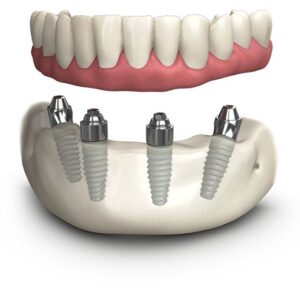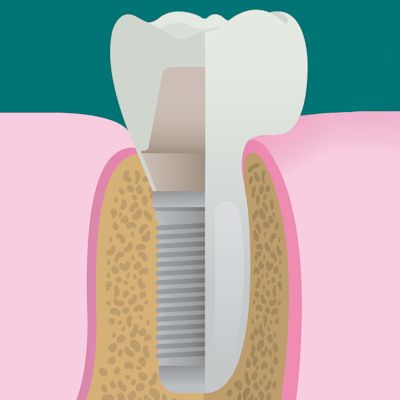
Aesthetic improvements have become an important focus in dental implantology, so recently, there has been growing interest in ceramic implants.
The gray color of titanium can be an aesthetic problem in the anterior and premolar areas, especially if the gum phenotype is thin.
Aesthetic requirements have led to the development of a material for dental implants composed of yttrium-modified tetragonal zirconia (3Y-TZP), a material that has only moderate strength (5-8 MPa√m) and is remarkably fracture-resistant.
Additionally, depending on the production process or surface properties, 3Y-TZP may be sensitive to low-temperature degradation (LTD) in a wet environment.
Recently, triphasic oxide-based materials in ceria-modified zirconia (Ce-TZP) have been developed, which show higher resistance to LTD than 3Y-TZP. For this reason, cerium is an interesting alternative to stabilize zirconia in the biomedical field, as its resistance to aging is excellent.
Research Typology and Analysis Modality
In an experimental laboratory study published in “Dental Materials,” the authors evaluated the performance of sandblasted zirconia ceramic implants based on innovative ceria-modified zirconia (Ce-TZP) composition compared to titanium implants.
Twenty-four ceramic dental implants and twenty-four titanium implants were tested in six Beagle dogs. Surface topographies were studied using confocal microscopy. The effects of local tissues were assessed 4 to 13 weeks after implant placement through histology.
A statistical analysis ANOVA (5% significance level; p <0.05) was conducted to compare peri-implan
t histomorphometric parameters on buccal and lingual aspects, including bone-implant contact (BIC) between the test groups and the considered time periods.
Results
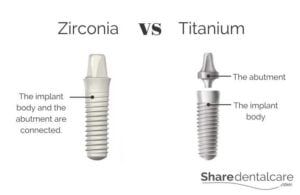
Titanium ceramic implants and experimental implants exhibited moderate and minimal inflammation, respectively. At 4 and 13 weeks, ceramic implants showed an inflammatory response in tissues similar to that of titanium implants. There was no statistically significant difference between the titanium and ceramic groups regarding BIC values (mean ± SD) on buccal or lingual aspects or when combined (respectively, for titanium and ceramics, 68.4 ± 14.7% and 75.0 ± 13.5% at 4 weeks and 92.0 ± 8.6% and 86.1 ± 13.8% at 13 weeks).
Conclusions
Based on the data from this study, which should be confirmed in other similar in vitro and clinical studies, it can be concluded that dental implants with this newly created zirconia-based ceramic composition have biocompatibility and osseointegration similar to those observed in titanium implants. These preclinical results confirm the potential for the use of these new zirconia-based ceramics in oral implantology.
Clinical Implications
Based on this laboratory study, new triphasic implants based on ceria-stabilized ceramic with Ce-TZP content appear promising as they exhibit a tissue response similar to that observed in titanium implants and can be considered biocompatible. However, further in vitro and clinical studies are needed to confirm these findings.
For more information:
Chacun D, Lafon A, Courtois N, Reveron H, Chevalier J, Margossian P, Alves A, Gritsch K, Grosgogeat B. Histologic and histomorphometric evaluation of new zirconia-based ceramic dental implants: a preclinical study in dogs.”